
From ‘We Sent It’ to ‘We Know Who Received It’, in One Trusted Customer Journey
 Emily Plummer


Financial services firms have spent years digitising customer journeys, yet three fundamental challenges often remain disconnected: knowing who the customer is, verifying their identity, and communicating with them securely. Bringing these together creates a simpler, more trusted way to serve customers digitally.
Legacy data and incomplete customer records remain a significant barrier to moving more financial services communications from post to digital channels. Whether communicating by post or digitally, organisations need accurate, up-to-date contact information and confidence that they are reaching the intended person. Bringing communications online provides an opportunity to strengthen customer records, verify identity where required, and create clearer evidence that important information has been delivered and subsequently engaged with by the customer.
If confidence is missing at any one of these points, print, pack, and post can appear to be the safer fallback. Yet paper brings its own limitations. It is expensive to produce and handle, slow to reach the customers, and difficult to track beyond dispatch or delivery to an address. A delivered letter does not, by itself, prove that the intended recipient opened it, understood, or acted on it.
The actual barrier to digital transformation is therefore not the absence of technology. It’s that there is a lack of joined up thinking when it comes to verifying customer data, verifying the identity of the recipient, and then securely communicating with them.
Bringing those capabilities together creates a connected route from incomplete customer records to secure, verified digital engagement.
Digital by Default Requires More Than an Email Address
The regulatory direction of travel makes this particularly timely.
The Financial Conduct Authority’s PS25/13 amended the definition of “durable medium” to make electronic communication the default mode of communication with retail clients for relevant MiFID derived requirements from 12 January 2026. The change supports a wider move towards digital delivery, while retaining important responsibilities around sustainability, accessibility, record-keeping, and the provision of paper where required.
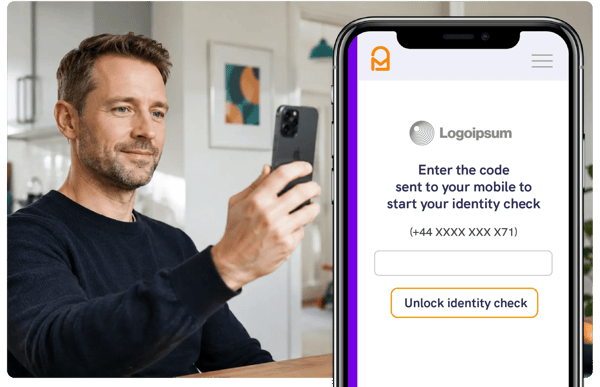
For electronic communication to become a dependable default, firms need confidence in the customer data behind it. That means being able to:
- confirm that customer records are accurate and up to date, including checking mortality status where appropriate;
- identify and maintain reliable contact details;
- communicate sensitive information securely;
- carry out proportionate identity and liveness checks when additional assurance is required; and
- evidence that important information has been delivered and accessed by the customer.
Firms must also maintain suitable alternatives for customers who cannot, or do not wish to, engage digitally.
In other words, digitising the delivery mechanism is only one part of the job. Trust has to be established and maintained throughout the whole journey.
Disconnected Journeys and Why They Don’t Work for Customers
Many organisations we speak to already have tools that address an individual part of this challenge. One service may improve or validate customer data. Another may transfer sensitive information securely. A third may be used when a higher level of identity assurance is required. But from the customer’s perspective, those separate systems are fragmented and create noticeable friction.
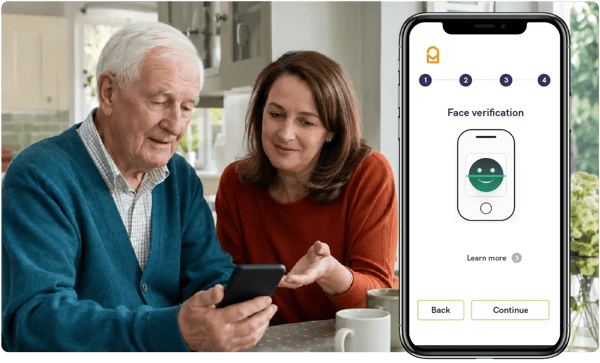
The usual scenario is that a customer receives an email, gets signposted to a portal, asked to create an account and user credentials, then redirected to a separate identity checking process. Each transition introduces another opportunity for confusion, abandonment, concern about whether the journey is genuine, or sheer frustration. From an internal business perspective each layer of friction creates more integration, reconciliation, and audit requirements.
Getting this process right matters most when the communication is sensitive or time-critical, like a pension decision, insurance claim, mortgage application, change of personal details, or request involving access to an account. These are the moments when organisations are judged by the delivery of their offering, when customers need greater assurance, and when unnecessary friction can cause most frustration and delay.
This market challenge has been identified by Mailock in collaboration with LexisNexis® Risk Solutions. The collaboration has developed an approach that brings together customer data and identity intelligence from LexisNexis®, AI-powered identity verification through IDVerse®, and Mailock’s secure digital communications and Digital Recorded Delivery® capabilities. It provides financial institutions and advice firms with a clearer route from incomplete customer records to secure, verified digital engagement, while keeping each control distinct, robust, and auditable.
One Connected Workflow: Find, Reach, Verify, and Evidence
The combined proposition brings together three complementary capabilities.

- Verify customer contact information. The data enrichment capabilities of LexisNexis® Risk Solutions help organisations cleanse and enhance existing records. Where available, missing email addresses can be appended to a given name and postal address, creating an additional route through which the customer can be reached.
- Open a secure digital channel. Mailock delivers the communication to the customer's email inbox while protecting the sensitive content. Recipient authentication helps the organisation establish that the message is being accessed by the intended person rather than relying on possession of an email address alone.
- Apply higher-assurance identity verification when it is needed. For journeys requiring stronger proof of identity, LexisNexis® IDVerse® can be initiated from within the secure communication experience. IDVerse® combines AI-powered document authentication with biometric face matching and liveness checks to help distinguish genuine customers from manipulated documents, impersonation attempts, and deepfakes.
- Capture evidence of the interaction. Mailock's Digital Recorded Delivery® records key events across the communication journey, including secure access and, where used, completion of the identity verification step. This gives the organisation a connected audit record instead of evidence distributed across several unrelated systems.
The customer does not have to find an unrelated portal or install an app for a single transaction. The verification journey begins from a communication they have received through a known channel and remains connected to the reason the organisation contacted them in the first place. This brand context is important for customer trust. Security measures are more likely to inspire confidence when customers understand who is asking them to act, why the check is needed, and what will happen next.
A Stronger Operational Case for Digital Communication
The commercial case begins with the visible cost of print, fulfilment, and postage, but it extends further.
Paper-based journeys create handling, scanning, reconciliation, and exception-management work. Returned mail needs to be investigated. Responses take longer. Customer service teams spend time confirming whether documents were sent or received. When a process also requires proof of identity, further manual checks and hand-offs add cost and delay.
A connected digital journey can help organisations:
- increase the proportion of customers who can be served digitally;
- reduce print, fulfilment, and postage volumes where appropriate;
- accelerate the delivery of time-sensitive communications;
- remove avoidable hand-offs between communication and verification systems;
- reduce manual processing and exception handling;
- create clearer evidence for governance, compliance, and management information; and
- give customers a faster route to read, respond, and complete the required action.
The scale will differ by organisation, but the financial principle is consistent. A smaller advice firm may focus on hundreds of pounds in annual savings, while a major institution may be addressing millions. On a simplified 10% operating-margin basis, removing £1 of cost can have the same profit effect as generating £10 of additional revenue before the extra cost of winning and servicing that business.
Engagement matters just as much as delivery cost. Mailock's latest published aggregated Enterprise data reports average open rates above 80%. Reaching the inbox through a familiar channel, without requiring the recipient to register for a separate portal, helps turn digital delivery into genuine customer engagement rather than simply shifting a document from one system to another. Moving communications from print and post to secure digital delivery can also significantly reduce the carbon associated with printing, paper, physical handling, and transportation, supporting organisations' wider sustainability goals.
Supporting Consumer Duty Outcomes
The collaboration also has relevance to Consumer Duty, particularly the expectation that communications should meet customers' information needs and equip them to make effective, timely, and properly informed decisions.
A communication cannot support understanding if the customer does not receive or access it. Nor does a secure process deliver a good outcome if it creates so much friction that a legitimate customer gives up.
Connecting secure delivery and proportionate identity assurance can help firms reduce those avoidable barriers while generating better evidence about customer engagement. Reducing unnecessary communication costs may also contribute to the wider work firms undertake when assessing operational efficiency and fair value.
Technology does not confer compliance on its own. Each organisation remains responsible for defining the appropriate level of authentication, establishing a lawful basis for its use of customer data, meeting accessibility and record-retention requirements, and monitoring the outcomes experienced by different customer groups. The value of a connected workflow is that it gives firms stronger controls and clearer evidence with which to discharge those responsibilities.
Trust Should Be Proportionate
Not every communication requires a full biometric identity check. Applying the highest-friction control to every message would be neither proportionate nor customer-friendly.
What is more useful is progressive assurance. A routine communication may require secure access and recipient authentication. A higher-risk interaction such as changing bank details, accessing sensitive records, or completing a regulated transaction may justify stepping up to document and biometric verification. Our guide to which identity check you need maps ID, KYC, and AML checks to moments like these.

By making identity verification part of the communication workflow, organisations can apply that additional assurance at the point it is genuinely needed. This supports stronger fraud controls without creating unnecessary barriers for customers completing lower-risk interactions.
From Isolated Transactions to Trusted Digital Relationships
Paul Holland, CEO of Beyond Encryption, explains the opportunity:
“Most organisations have had to solve three separate challenges: finding the right customer, confirming their identity, and communicating with them securely. Bringing those capabilities together removes unnecessary complexity and creates a communication channel that becomes more valuable with every interaction.”
Paul Holland, Founder and CEO, Beyond Encryption (Mailock)
That is the wider purpose of Mailock’s Better Together strategy. Digital transformation is rarely held back by one missing feature. It is held back by gaps between systems, processes, and sources of trust.
By combining the customer data capabilities of LexisNexis® Risk Solutions and IDVerse® identity verification with Mailock's secure communications and Digital Recorded Delivery®, organisations can connect the evidence they hold about a customer with the way they communicate and the assurance they apply at critical moments.
The result is not simply a digital replacement for post. It is a route to lower operating costs, faster customer journeys, and a more reliable communication record while giving customers a familiar and secure way to engage. That is how incomplete records begin to become trusted digital relationships.
References
PS25/13: The MiFID Organisational Regulation, Financial Conduct Authority, 2025
PRIN 2A.5 Consumer Duty: Retail Customer Outcome on Consumer Understanding, FCA Handbook, Financial Conduct Authority, 2026
Data Enrichment, LexisNexis® Risk Solutions, 2026
LexisNexis® Risk Solutions Releases Enhanced LexisNexis® IDVerse® to Advance Fraud Prevention Through Innovative Document Authentication, LexisNexis® Risk Solutions, 2025
Reviewed by
Sam Kendall, 30.09.26
|
Originally posted on 06 10 26
Emily, our marketing director, uncovers the human stories behind our products. With 18+ years in tech and SaaS marketing, she excels in content strategy, SEO, brand awareness, PR, events, and social media. |
Email Series
Subscribe to
.svg)
Subscribe to Privacy Decoded, our monthly email briefing about privacy, digital trust, and the forces shaping our online world.
 Previous post