For someone who is blind, being treated as a robot by a CAPTCHA for using a keyboard instead of a mouse is a frustrating barrier.
Put a similar obstacle in a mortgage application or a pension service, and the consequences could extend well beyond an unread webpage.
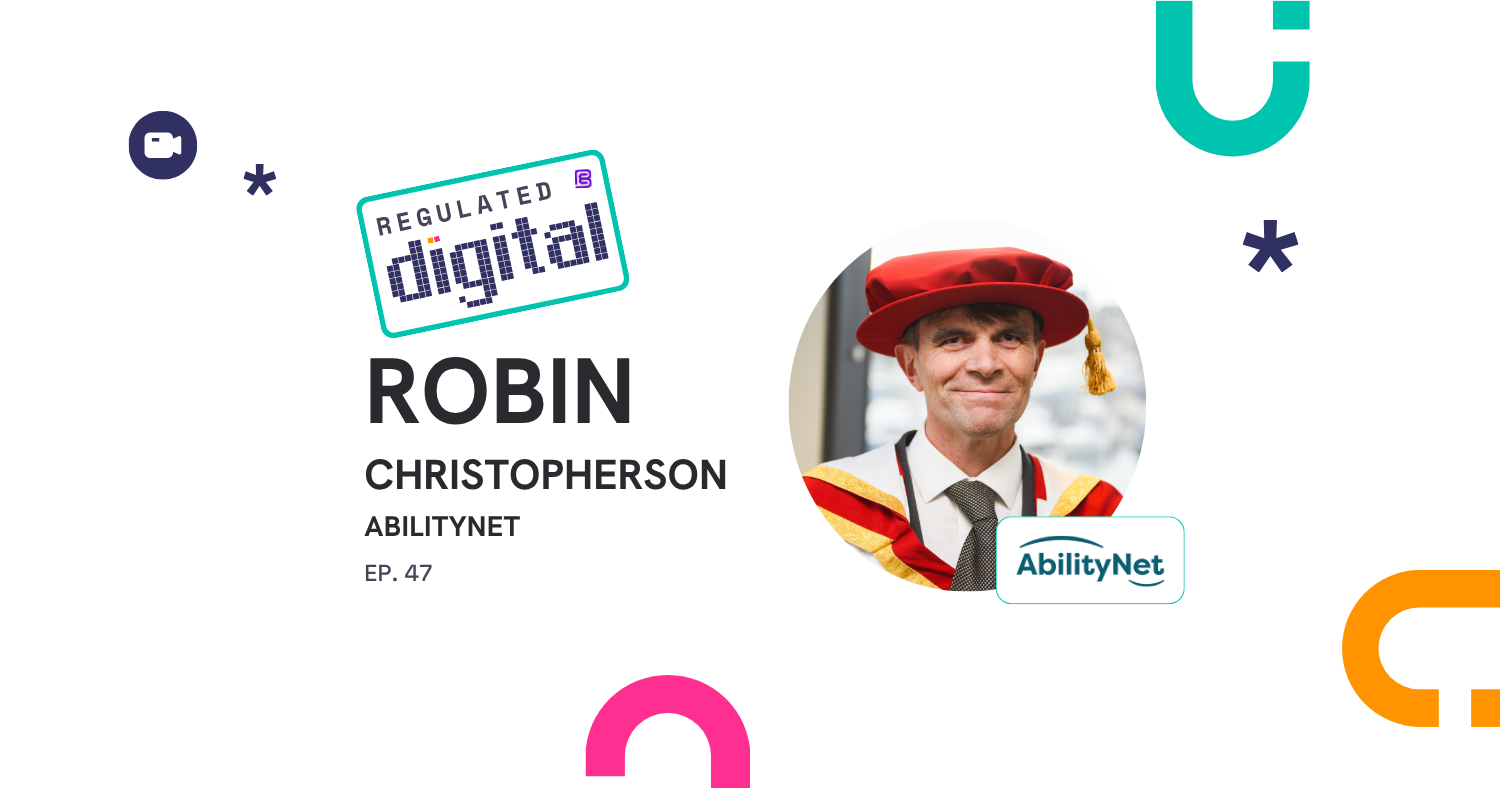
Robin Christopherson MBE, Head of Digital Inclusion at AbilityNet, joined Sam Kendall on Regulated Digital to discuss how AI can improve access to financial services, and where it can exclude the people who need them.
Robin regularly uses AI to navigate inaccessible services, yet still encounters barriers in the systems surrounding it. His experiences show why firms need to test the whole customer task, from the first identity check to the help available when something goes wrong.
Watch the full episode above, or listen on Apple or Spotify podcasts.
Created with AI from episode transcript
AI Can Give Customers More Independence
A conversational interface can let someone explain what they want to do without navigating unfamiliar menus. For customers managing insurance, savings, or pensions, that could mean asking for an explanation in simpler language or requesting information in a format they can use.
For Robin, this is already part of everyday life. He uses AI to help him access websites that he would otherwise struggle to use:
"So I would always go to AI as my preferred UI to be able to access anything online."
Those benefits depend on keeping a choice of interaction methods. Voice may help someone who struggles with a keyboard, while typing may suit someone with a stammer or a customer using their phone in a noisy place.
AI-generated explanations can also be wrong. Firms need to test the information their service provides alongside how customers reach and understand it. An easier interface is useful only if people can rely on what sits behind it.
Authentication Can Lock Out Legitimate Customers
A helpful chatbot offers little independence if the customer cannot get through the identity check before using the service. Robin describes verification processes that ask him to find a white background, position his face in a box, and follow visual instructions.
As a blind user, he cannot independently follow those instructions. He has had to ask his wife for help, an option that will not be available to everyone. Completing a check with someone else's assistance is a different outcome from being able to complete it yourself.
His recommendation is to offer alternative authentication routes appropriate to the task. Checking access to sensitive financial information is a different proposition from asking someone to prove they are human before reading an article.
Sam Kendall connects this to how security is presented to customers:
"we talk a lot about friction and security versus using security as a kind of communication advantage by making things more trustworthy and explainable."
Sam Kendall, Regulated Digital Host, Beyond Encryption (Mailock)
That means explaining the check and testing whether the intended customer can complete it. W3C's accessible authentication guidance gives practical examples for account login, including supporting password managers and allowing copy and paste. It addresses part of the problem; it does not establish that an entire service is accessible.
Recovery Needs a Route the Customer Can Use
The next test is what happens after a failed attempt. A rejection needs to explain what the customer can do next, with an alternative they can actually use.
Robin has not been offered that choice:
"So I've never been offered an alternative channel for an authentication process."
A fallback needs to be available at the point where the customer gets stuck. Test the route out of a failed check as carefully as the successful path.
Sometimes an alternative can be simple. Robin gives the example of a date picker that someone cannot operate: providing a text field alongside it lets them enter the date another way. Where the barrier needs human help, make that support easy to find and capable of resolving the problem.
The FCA's consumer support review provides relevant context. It does not prescribe particular channels, but says the channels firms offer must meet their customers' needs, including customers with characteristics of vulnerability and those facing non-standard issues.
Signpost known barriers before customers reach them. Someone should not have to complete most of a lengthy application before discovering that the final step is inaccessible and the organisation already knows about it.
Test the Service Before You Buy It
Accessibility problems can arrive through a supplier. Robin advises buyers to ask about accessibility before signing and request examples of comparable work. Test those examples to see whether the supplier can deliver what it promises.
For an AI assistant, testing should cover labelled buttons, keyboard navigation, and the structure of generated responses. Robin has asked an AI tool to add headings so he can move between its answers with his screen reader. Customers should not need specialist prompting knowledge to obtain output they can navigate.
The same scrutiny belongs in customer communications. When a firm sends a sensitive document, the access check and the document itself both need consideration. A recipient needs to get through the check and then read the information they came for.
Checking Who Can Open Sensitive Email?
Learn how Mailock adds recipient authentication to control access to encrypted messages.
An authentication feature alone cannot establish that the journey is accessible. Test the complete task with disabled users, including third-party components and error states. For AI-assisted journeys, check how the assistant responds to different needs, and whether its language is respectful and appropriate.
Repeat testing as the service changes. Robin describes AI-enabled products as a moving target: a change to the interface or generated output can alter what customers are able to do.
Give Accessibility an Owner and a Budget
Robin recommends senior sponsorship backed by resources, an accessibility lead, and clear responsibilities across teams. A champions network can help colleagues share knowledge, but it needs people with the time and authority to act.
AbilityNet's Digital Accessibility Maturity Model offers a way to assess that wider picture, including leadership, skills, processes, and procurement. It can help teams identify gaps and agree priorities beyond an individual website audit.
For organisations with limited resources, Robin recommends starting with key customer tasks and identifying the highest-risk barriers. Drawing those recommendations together gives teams a practical starting point:
Start With One High-Risk Customer Task
Identify where customers can become blocked.
Test the task, including failures, with disabled users.
Provide a usable alternative and clear recovery information.
Assign responsibility for fixing and retesting the barriers.
Feedback needs to become work. Robin suggests involving employees and customers, recording problems in a ticketing system, and acting on them. A reported barrier needs an owner who can take it through to resolution.
Robin remains optimistic about conversational interfaces, while stressing that websites and apps still need to work. For a firm building AI-enabled services, the next test could be a task a customer has already reported as inaccessible. After making a change, bring users back to check whether they can now finish it independently.
FAQs
How Can AI Improve Accessibility in Financial Services?
AI can help people navigate services through conversation and adapt explanations or formats. Its usefulness depends on accurate information, accessible controls, and a choice of interaction methods. Customers also need usable ways through authentication and errors.
What Makes Authentication Accessible?
Customers need to be able to complete the check using methods and assistive technologies that work for them. Consider alternative routes, clear instructions, and recovery options. W3C's guidance includes supporting password managers and copy and paste for account login.
Where Should Firms Start With Accessibility Testing?
Start with important customer tasks and the points where failure could prevent access to a service. Involve disabled users, test error states and third-party components, and assign responsibility for fixing what you find.
Sam Kendall works on digital marketing for Mailock by Beyond Encryption, helping build B2B marketing activity around research, first principles, and sustainable growth. He writes about marketing effectiveness, positioning, customer communications, and digital culture, with longer-form work published at ATNL.net.
 Sam Kendall


.svg)
 Previous post