A grant of probate is a sheet of A4 with a small hologram in the corner. Whoever holds one can close a dead person's bank accounts, sell their home, and distribute their money. Getting one, according to a man who has spent nearly three decades tracing missing heirs, does not require you to prove who you are.
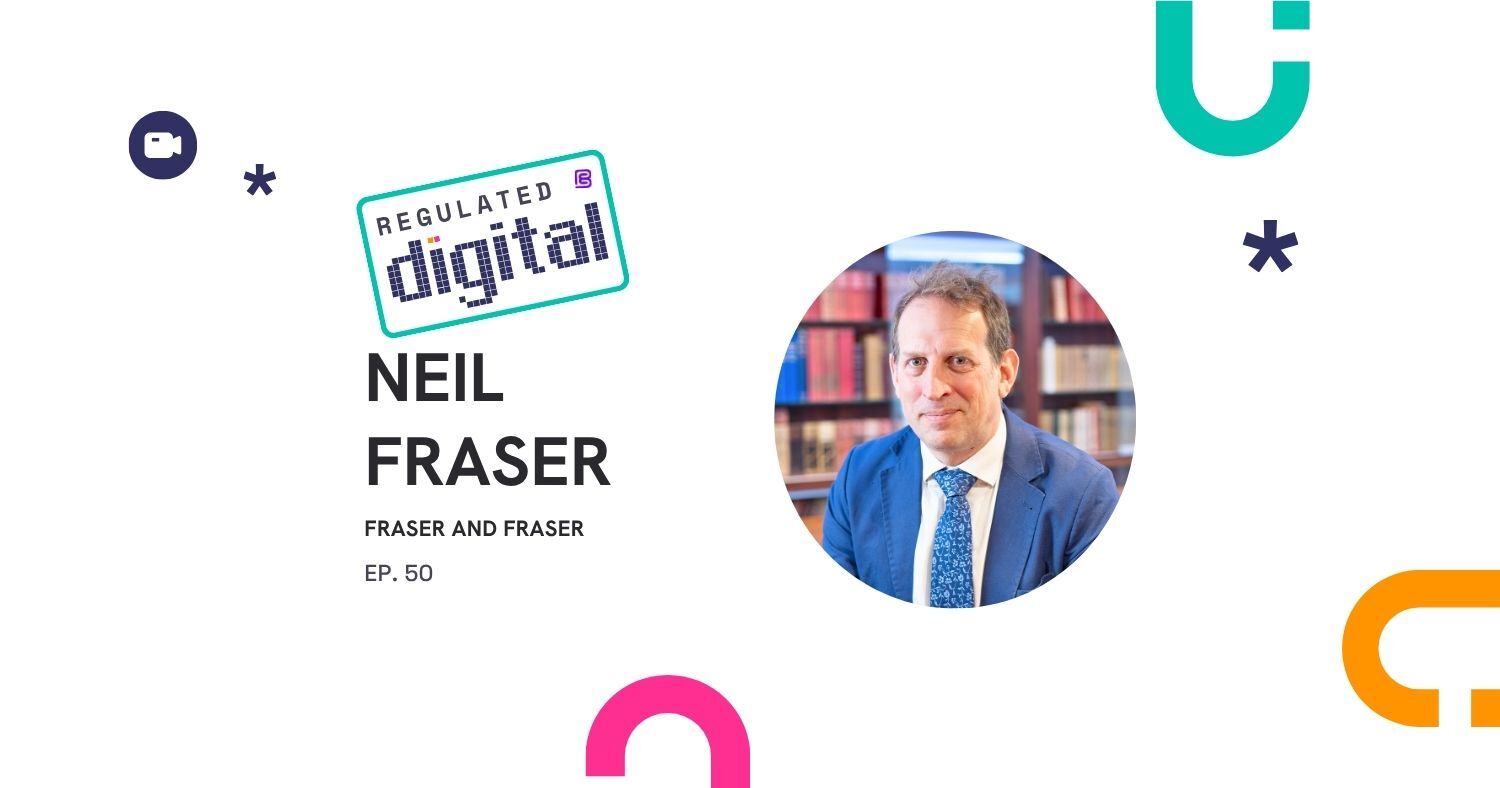
On this episode of Regulated Digital, Neil Fraser, Partner at Fraser and Fraser, the probate research firm his great-aunt founded in 1923, explains how forged wills are used to claim the estates of people who have died. His firm worked with the BBC on its 2025 investigation into the fraud.
The fraud is specific to probate in England and Wales, but the weakness behind it will be familiar to any organisation that relies on documents to prove identity: one trusted document, issued with little scrutiny of the applicant, then accepted downstream with little scrutiny of the document.
Watch the full episode above, or listen on Apple or Spotify podcasts.
Written from the episode transcript with the help of AI, then edited and checked by our team.
How an Unclaimed Estate Becomes a Target
When someone dies without a will and no family can be found, their estate can pass to the Crown as bona vacantia. In England and Wales, the Government Legal Department's Bona Vacantia Division publishes an unclaimed estates list so that relatives can come forward. Probate researchers such as Fraser and Fraser work from that list, as well as from local authority and solicitor referrals, to find the family before the money goes to the Treasury.
Until then, nobody has legal authority over the estate. Nobody can change the locks, tell the bank to close the accounts, or sell the house. That authority comes from one document. Where there is a will, the executor applies for a grant of probate. Where there isn't, the closest living relative applies for letters of administration. GOV.UK sets out who can apply, and once issued, the two grants are treated the same way.
Neil's concern is what happens after the grant. For an estate below the £325,000 inheritance tax threshold, no third party looks at the estate again: nobody reviews the estate accounts or the family tree. "You've got the grant of letters. That is it."
One Sheet of A4 and No ID
His comparison is a pharmacy loyalty account. To log in, he has to approve the request on his phone with his face or a PIN. To apply for probate, in his experience, nobody asks for identification at all, and an applicant can use any name and any address.
"Two-factor authorisation if you want to look at your Boots Advantage Card, but to take out a grant of probate, which may be at £300,000 ... I do not even have to show ID."
The document is also easy to imitate. A sealed copy carries a small hologram, and holographic paper is sold online. According to Neil, most banks will accept a photocopy, and many are content with a copy stamped "certified" and signed by the person presenting it.
There is a way to check a grant: a telephone number printed at the bottom. When Neil asked his dozen researchers, who handle hundreds of grants, how they would verify one, none mentioned it. When he rang it himself, the number led to no verification service, just a message system with no option to confirm a document.
The only check printed on a grant is a phone number that no longer verifies anything.
The older process was slower but harder to exploit. Applicants went to their local probate registry, showed ID, and were interviewed by a registrar, under oath or affirmation, about how they came by the will and how they knew the deceased. "The legacy system was reasonably secure 'cause you did turn up with ID and you did get an interview." Applications have been possible online since 2017, as the Law Gazette noted when the fraud became public.
The Pattern Behind the "Dear Friend" Wills
In England and Wales, people can leave their money to anyone, and Neil has no quarrel with that. A will does not have to name a relative, so a missing family link proves nothing on its own.
What his researchers noticed was a pattern. Wills surfaced for estates on the unclaimed list, leaving everything to single overseas nationals in their twenties, each described as "my dear friend" and living a hundred miles from the person who had died. In one set of files, the same young man was named in four or five wills, as the best friend of several elderly people who lived nowhere near him.
A will needs two witnesses, and witnesses can be traced and asked what they saw. In the cases Neil flagged, the witnesses had died, could not be found, or gave addresses that did not exist. And because a will is presumed valid, the burden falls on whoever challenges it to prove that it is not.
What Happened to the Unclaimed Estates List
The list came down in July 2025 after BBC reports of systematic will fraud. Daily updates resumed on 12 January 2026, with fewer details per estate, after a review that found no evidence the list had been the source of fraud.
Neil disputes that finding: he had a dozen files on his desk where he knew the will was not genuine. When the list returned with less information, he told the Law Gazette it looked like "an attempt to fix a spreadsheet rather than fix the system."
Why the Losses Rarely Become Statistics
By the time a forged will is spotted, the grant has usually been issued and the money has gone. Getting a grant revoked, in Neil's experience, costs between £75,000 and £100,000 in legal fees, and those fees cannot be recovered.
Fraser and Fraser has done it twice, both times stopping a fraudulent will before the money left. In one case, the will named a sole beneficiary in Pakistan, and the probate office wanted the firm to fly out, find him, and persuade him to sign an affidavit giving up his grant. He had nothing to gain from signing. The firm went to court instead, at a cost of £75,000.
That cost explains why so little of this fraud is counted. Few families will spend that kind of sum proving the loss of an estate they will not get back, and Action Fraud, Neil says, will not act until a court has found a will fraudulent. The case goes unreported, appears in no statistics, and supports the view that there is nothing to fix.
Four Checks Neil Would Add
Neil does not think any single change solves this, but none of the checks he wants need new technology. He estimates a verification code for grants at between £10,000 and £50,000 to build, and certainly under £100,000, against fraud he puts in the millions.
Check ID at Application
Anyone applying for a grant should prove who they are, with a rigorous check, even when a solicitor applies for them. A solicitor will already have run know-your-client checks, but Neil wants that check recorded with the grant.
Make the Grant Checkable
Replace the phone number with something that works, such as a QR code that opens a page confirming the grant's details against a code printed on the document. "It should be really simple. It's not hard to prove a document."
Bring Back Interviews for Private Applicants
Where a private individual applies rather than a solicitor, an interview would confirm their relationship to the deceased and how the will came to light.
File the Accounts and the Family Tree
The estate accounts, the distribution schedule, and on intestacy the family tree, would be filed with the grant. At present, nobody checks that every entitled relative has been looked for. In a cousins case, where the research goes back to the grandparents, a beneficiary can be found on the mother's side while the father's side, with an equal claim, is never contacted.
Neil contrasts this with New York, where, as he describes it, an attorney represents unknown possible relatives and confirms that everyone has been looked for before the estate is distributed. "In the UK, all we can say is we found one person."
Digital wills are part of the longer-term picture. Video witnessing was allowed for wills made between January 2020 and January 2024, and the Law Commission's 2025 report on modernising wills law recommends specific provision for electronic wills, with requirements to keep them safe and reliable. Neil favours a government-run platform with real witnesses, but warns that recordings can now be altered easily, so their metadata would need protecting too.
"Where the process is falling down is proving who you are, proving that a document is genuine, proving that you have a valid claim."
Sam Kendall, Digital Marketing Manager, Beyond Encryption (Mailock)
Those three proofs map neatly onto Neil's list: ID at application proves the person, a checkable grant proves the document, and interviews and filed accounts test the claim.
What Document-Reliant Organisations Can Take From This
Banks, Neil says, face no extra work from any of this: a grant arrives, and the process says pay. Many ask the person presenting it for ID, but a letter on a solicitor's letterhead often goes through with few checks. Fraser and Fraser is not a firm of solicitors, and as a traditional partnership it has no company registration number, yet banks regularly pay out on its signed letters.
The lesson travels beyond probate. A document proves only what its issuer will confirm, and a letterhead proves only that someone printed it. Confirming a document with whoever issued it, and confirming who is presenting it, are separate checks, and the probate cases show what happens when neither is made.
From Mailock
Need to Confirm Who You're Dealing With?
Learn how Mailock lets a sender start an ID, KYC, or AML check by secure email.
Neil's ask of policymakers is the simplest of his four. "I'd love them to check ID when someone applies for a grant," he says, alongside filing the estate accounts. He argues both could use systems that already exist: copies of grants can already be requested, so the accounts and distribution schedule could be stored alongside them.
This content is for general information only and is not legal advice. Probate rules differ in Scotland and Northern Ireland.
FAQs
What Is Bona Vacantia?
Bona vacantia is ownerless property that passes to the Crown. It includes the estates of people who die without a will and with no known entitled relatives. In England and Wales, the Government Legal Department publishes an unclaimed estates list so that relatives can come forward.
What Is the Difference Between a Grant of Probate and Letters of Administration?
A grant of probate is issued where there is a will, and the executors named in it apply. Letters of administration are issued where there is no will, and the closest living relative applies. Once issued, both give the holder authority to deal with the estate.
Was the Unclaimed Estates List Taken Offline?
Yes. It was removed in July 2025 after BBC reports that criminals were using it to target estates with forged wills. Daily updates resumed on 12 January 2026, with fewer details published for each estate.
Are Electronic Wills Being Considered in England and Wales?
Yes. The Law Commission's May 2025 report recommends specific provision for electronic wills to be formally valid, with requirements to keep them safe and reliable. It is for the Government to decide whether to legislate.
Sam Kendall works on digital marketing for Mailock by Beyond Encryption, helping build B2B marketing activity around research, first principles, and sustainable growth. He writes about marketing effectiveness, positioning, customer communications, and digital culture, with longer-form work published at ATNL.net.
 Sam Kendall



 Previous post