Waiting is one of the hardest parts of a mortgage journey. A borrower may know that their application is moving, yet still have no idea what has been checked, what remains outstanding, or when they will hear back.
That uncertainty becomes more difficult when rates are changing, a property transaction is time-sensitive, or the customer is worried about affordability.
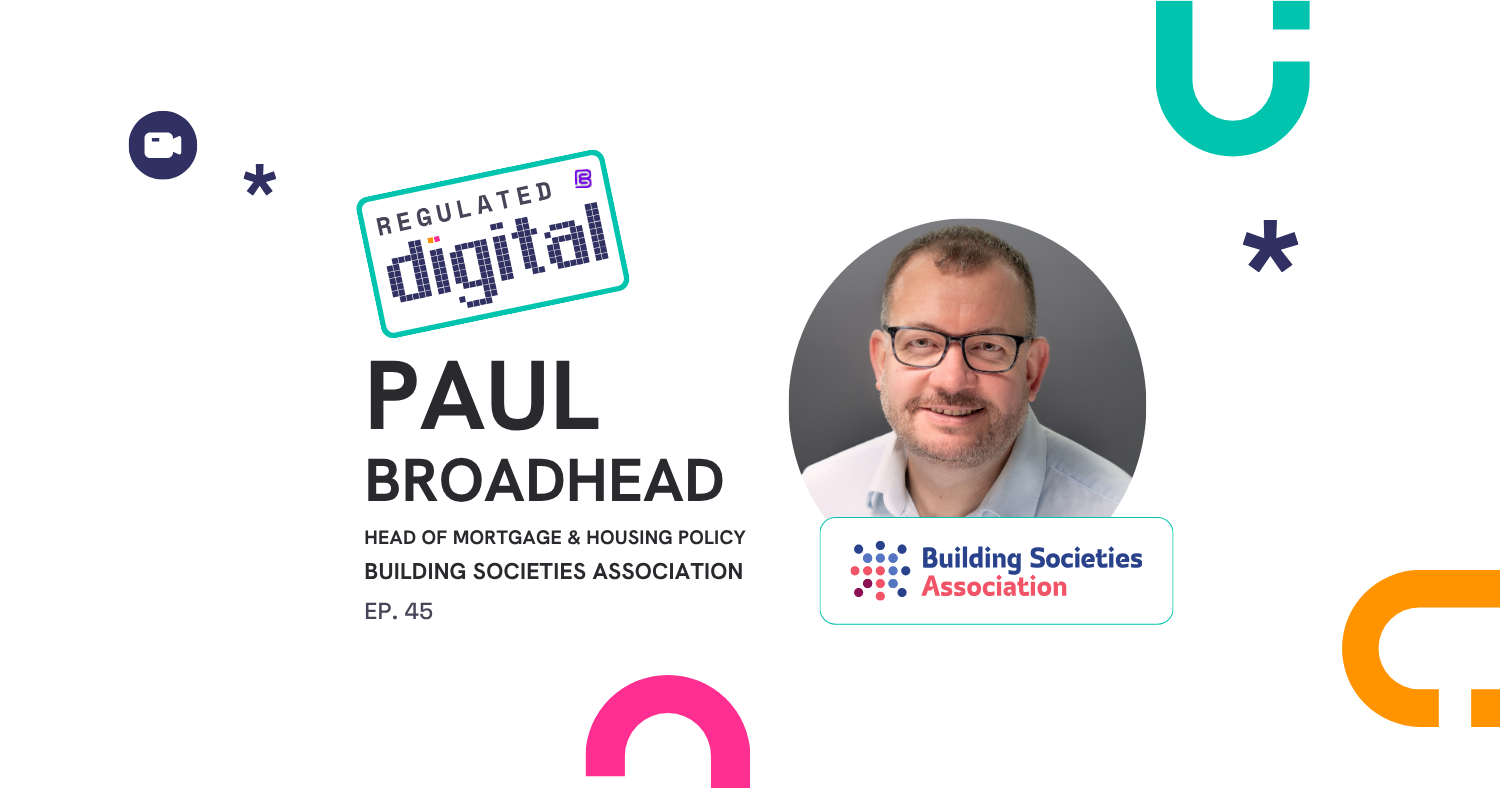
In this episode of Regulated Digital, Paul Broadhead, Head of Mortgages and Housing at the Building Societies Association (BSA), joins us to examine how lenders can combine efficient digital journeys with clear explanation, secure communication, and access to human support.
Building societies bring a useful perspective to this question. Their customer-owned model places long-term member relationships at the centre of their work, while their borrowers increasingly expect to upload documents, complete checks, and follow applications online.
Paul describes long-term trust and value as a defining priority. Each digital step should leave the member clearer about what has happened, what it means, and what they need to do next.
Watch the full episode above, or listen on Apple or Spotify podcasts.
Created from episode transcript
Certainty Matters Most When Borrowers Are Waiting
Mortgage communication becomes most important during periods of uncertainty: when a customer is working out what they can afford, gathering evidence, awaiting a decision, or preparing for a change to their rate or monthly payment.
When rates move quickly or lenders withdraw products, delays and unexpected changes become more noticeable. A vague status such as “processing” offers little reassurance when the borrower does not know whether their documents arrived or whether someone needs more information.
Useful communication closes that information gap. It confirms what has been received, explains the current position, sets a realistic expectation for the next update, and gives the borrower a clear route to ask for help.
Good mortgage communication explains what has happened, what it means, what comes next, and where the borrower can get help.
That principle applies whether the update arrives in an app, a portal, an email, through a broker, or during a telephone conversation. The channel can change; the need for certainty remains.
Digital Journeys Should Reduce Uncertainty
Administrative tasks often work well online. Document uploads, identity checks, affordability information, routine reminders, product transfers, and application tracking can all reduce back-and-forth contact and allow customers to act in their own time.
Digital handling is particularly valuable once a borrower has received advice and knows what they want to do. They can complete routine steps without arranging another appointment, while advisers spend more time on the decisions that require judgement.
Digital Confidence Is Different from Financial Understanding
Comfort with apps and online forms does not remove the need for explanation. Someone can complete an identity check on their phone and still be unsure about an affordability assessment, a product feature, or the consequences of a long-term commitment.
"Digitally native does not necessarily mean financially knowledgeable."
Paul Broadhead, Head of Mortgages and Housing, Building Societies Association
The strongest digital journeys present the right information at the point it becomes useful. A confirmation that names the document received, for example, does more for confidence than a generic success screen followed by several days of silence.
Give Every Journey a Clear Route to Support
Every automated route needs a visible way to reach a person. That might mean webchat, a telephone team, broker support, or a branch. The route should appear before confusion becomes anxiety or abandonment.
Four Features of a Reassuring Digital Journey
Confirmation that information or documents have been received.
A meaningful status that describes the current stage.
A realistic time for the next action or update.
A clear route to an appropriate person when help is needed.
These features give customers the freedom to self-serve without leaving them trapped in a process they no longer understand.
Brokers Need Certainty to Give Borrowers Confidence
Brokers translate lender requirements, explain documents, manage expectations, and keep transactions moving. The information they receive from lenders becomes part of the customer experience.
Intermediaries already dominate mortgage distribution. The Intermediary Mortgage Lenders Association forecast their share of mortgage business would rise from 87% in 2024 to 91% in 2026.
Brokers can give reliable answers when lenders provide transparent case tracking. Clear requirements, progress notifications, and consistent information across portals, business development teams, and internal lender teams reduce the need to chase for updates.
Certainty also influences product recommendations. In a competitive property transaction, a broker may judge that a dependable decision and completion time offers greater practical value than a small difference in the monthly payment. Service quality becomes part of the product’s value to that borrower.
Sensitive Circumstances Change What Good Communication Requires
A mortgage is connected to a home, family finances, and a person’s sense of security. Illness, bereavement, financial pressure, low digital confidence, or an unexpected life event can change how well someone can understand information and act on it.
"A mortgage is tied to somebody's home and sense of security, and that has an impact on their wellbeing."
Paul Broadhead, Head of Mortgages and Housing, Building Societies Association
Inclusive support works best when it is considered during service design. The BSA’s No One Left Behind work encourages firms to consider vulnerability throughout product development, connect digital and financial inclusion, and make communications understandable for people with different levels of financial literacy.
Make Early Contact Easier During Financial Difficulty
Communications about payment difficulty should lead with practical options, available support, and the next action. A warning dominated by possible consequences can make an already anxious customer less willing to engage.
Early contact gives the lender more time to understand the customer’s circumstances. Digital routes can help someone take an initial step privately, review signposting, or complete budget information before they feel ready to speak. When they do make contact, they should not have to repeat the same sensitive story across several teams.
A Secure Message Still Has to Feel Familiar
Borrowers are rightly cautious when an unexpected message asks them to open a link or share personal information. A genuine communication needs recognisable sender details and a predictable route, clear instructions for checking authenticity, and an explanation of what the firm will never request.
Where mortgage documents or financial information are sent by email, Mailock can keep email as the delivery route while adding protected access, recipient authentication, secure replies, message revocation, and message tracking. The controls are most useful when the message still feels straightforward to open and verify.
Protecting Sensitive Mortgage Communications?
See how Mailock helps financial services teams keep email familiar while adding protected access, recipient checks, secure replies, and message tracking.
The same trust cues should continue across every channel. Customers need a consistent way to recognise the lender or broker, understand why information is being requested, and return to an official route if they are unsure.
Mortgage Reform Creates an Opportunity to Simplify Communication
Paul expects automation and AI to support more document checking, case triage, affordability processing, and routine customer updates. Their immediate value lies in making workflows faster and updates more timely while keeping accountability with the firm operating them.
The FCA’s 2026 Mortgage Rule Review consultation, which closed on 28 July 2026, proposed targeted changes to help more creditworthy consumers, including people with variable incomes, older borrowers, and those with past credit difficulties, access suitable mortgages. The FCA also identified enabling innovation and protecting consumers in vulnerable circumstances as continuing themes for the wider review.
Simpler underlying processes should make updates easier to explain. The government’s consultation on home buying and selling reform proposed wider use of digital property packs and a standardised core data set. Giving buyers, sellers, conveyancers, and lenders reliable information earlier could reduce repeated requests and make progress easier to explain.
Technology will still need to communicate certainty. A faster automated check offers limited reassurance if the borrower cannot see the outcome, understand the next step, or reach someone when the result does not reflect their circumstances.
Certainty Is the Principle to Protect
A good mortgage journey allows routine administration to happen quickly while preserving advice, judgement, and reassurance where they are needed. Borrowers should know where their case stands, brokers should receive information they can confidently interpret, and customers in sensitive circumstances should have safe ways to ask for help.
"A borrower should not have to chase a lender to find out whether a document arrived or what happens next. Digital communication should make those points explicit and give the customer a simple route to ask for help."
Paul Holland, Founder and CEO, Beyond Encryption (Mailock)
Mortgage technology will keep changing. Borrowers will still need a clear account of what is happening when their home and finances depend on the outcome.
FAQs
What Makes Mortgage Communication Effective?
Effective mortgage communication confirms what has happened, explains what it means, gives realistic timescales, sets out the next action, and makes appropriate support easy to reach.
Which Parts of a Mortgage Journey Can Be Digital?
Document uploads, identity checks, affordability information, application tracking, reminders, and product transfers can often be handled digitally. Advice, judgement, and reassurance should remain available when the decision or the customer’s circumstances require them.
How Can Lenders Support Vulnerable Borrowers Digitally?
Lenders can use inclusive design, plain language, channel choice, safe ways to disclose support needs, and clear access to human help. These considerations should be built into the journey from the design stage.
How Can Lenders Make Digital Mortgage Messages Easier to Trust?
Use recognisable sender details, predictable channels, appropriate access controls, clear verification instructions, and simple explanations of what the firm will never ask the recipient to disclose.
Sam Kendall works on digital marketing for Mailock by Beyond Encryption, helping build B2B marketing activity around research, first principles, and sustainable growth. He writes about marketing effectiveness, positioning, customer communications, and digital culture, with longer-form work published at ATNL.net.
 Sam Kendall


.svg)
 Previous post