A narrower financial recommendation should cost less to provide. The difficult part is deciding when that service is suitable and making its limits clear.
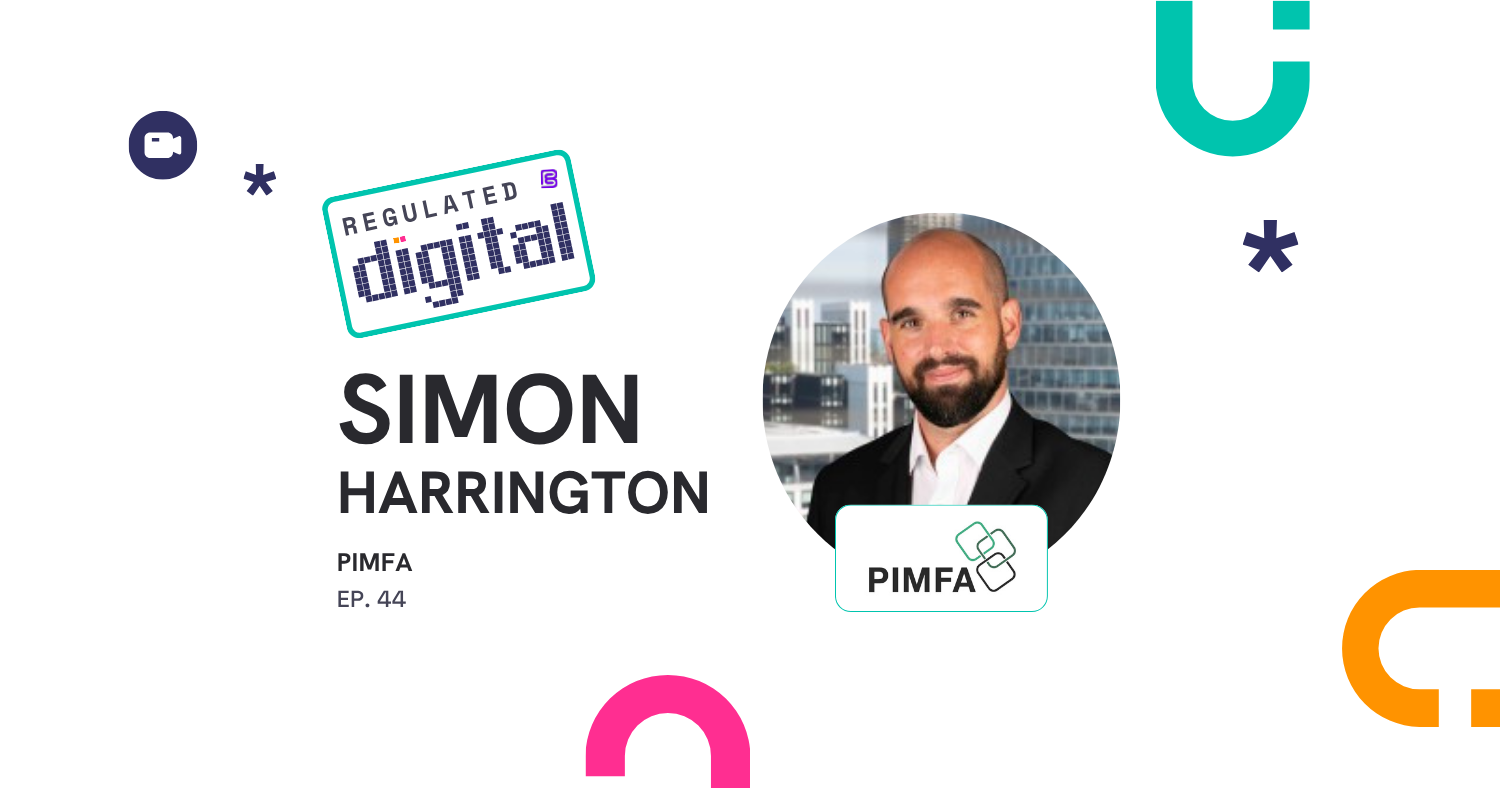
In this episode of Regulated Digital, we speak with Simon Harrington, Head of Public Affairs at the Personal Investment Management & Financial Advice Association (PIMFA), about whether simplified advice can widen access to personal recommendations without recreating the cost and complexity of holistic advice.
Simon joined PIMFA in 2017 after roles at Nest and HM Treasury covering automatic enrolment, pension freedoms, and the UK's response to the financial crisis. His policy background gives him a close view of the regulatory intent and the practical questions facing advice firms.
Watch the full episode above, or listen on Apple or Spotify podcasts.
Created from episode transcript
The Advice Gap Covers Different Levels of Need
The FCA estimates that around 23 million consumers are underserved by existing advice and guidance markets. That figure spans people who need general information, help with a defined pension or investment decision, and a wider review of their financial position.
Simon links the growing pressure on this market to pension freedoms and the greater responsibility placed on individuals at retirement. Advice is expensive for firms to deliver and for customers to buy, while many people have never developed the habit of seeking professional financial help.
The market needs useful steps between guidance and full financial planning. Each step must be distinct enough for firms to design, for advisers to deliver, and for customers to recognise.
Where Targeted Support and Simplified Advice Differ
Targeted support and simplified advice both sit within that continuum, but they use different information and produce different forms of help.
Type of Help
What It Uses
What the Customer Receives
Guidance
General information
Options and explanations without a personal recommendation
Targeted support
Shared characteristics within a customer segment
A suggestion designed for people in that segment
Simplified advice
Sufficient personal information for a defined need
An individual recommendation within a limited scope
Holistic advice
A wider understanding of the client's circumstances
An individual recommendation, often within an ongoing relationship
The final targeted support framework allows firms to provide suggestions designed for groups of consumers with common characteristics. Simplified advice would still involve an individual recommendation. The FCA has proposed replacing the requirement to consider all "necessary" information with an expectation that advisers consider "sufficient" information when assessing suitability.
The consultation has closed, so firms are waiting for the FCA's final policy position before committing fully to service design, technology, training, and distribution.
A Narrower Service Still Needs a Reliable Entry Point
Consider a customer who approaches a firm with £50,000 to invest. A limited service might gather enough information to recommend using an ISA and a general investment account without reviewing every part of the customer's financial life.
Real enquiries are rarely that tidy. The firm still has to decide whether the stated need can remain narrow. Its assessment may uncover debt, tax considerations, competing objectives, or limited capacity for loss.
"The only way to actually identify that someone would benefit from simplified advice or limited-scope advice ... is to go through a full fact-find, which in turn basically obviates the entire point of the delivery of limited-scope advice."
If the firm has to perform most of a holistic fact-find before deciding that simplified advice is suitable, much of the intended time and cost saving disappears.
The route into simplified advice cannot recreate the full process it is meant to streamline.
Existing relationships may make the model easier. A firm that already holds reliable information about a client could potentially use a limited process for a defined transaction, subject to the final rules and its own controls.
Commercial Viability Will Depend on the Firm
The FCA's proposals are relevant to advice firms, banks, insurers, SIPP providers, investment platforms, investment managers, and wealth managers. Their ability to turn the rules into a viable service will vary.
Smaller Advice Firms
A smaller practice still has to fund compliance, training, technology, quality assurance, and complaints handling. Selective use may be more realistic than a standalone mass-market proposition, perhaps for focused transactions, trainee advisers, or younger relatives of existing clients.
Larger and Integrated Providers
Banks, insurers, platforms, and vertically integrated firms can spread fixed costs across a larger customer base. They may already hold data that helps identify a focused need, while targeted support could direct some customers towards personal advice.
Simon expects the largest commercial opportunity to sit with organisations that already operate at scale or want to re-enter parts of the advice market. Scale creates room to build and test the service, but it does not remove the need for clear boundaries.
Questions Before Launching a Simplified Advice Service
Can the firm identify a focused need without completing a full fact-find?
What happens when the assessment uncovers a wider financial need?
Can the service be delivered at a price customers will pay?
How will customers move into holistic advice when appropriate?
PIMFA submitted its response to the FCA consultation on 22 May 2026. The questions raised in the interview show why the final wording will matter to firms deciding whether the model is commercially workable.
Customers Need to Understand Where the Advice Stops
A simplified service may still feel like holistic advice to the customer. They answer questions, receive a recommendation, and may speak to a qualified adviser. The difference lies in the scope of the assessment.
Customers need a plain explanation of what the firm considered, what it excluded, and what they may miss by choosing the narrower service. That explanation should appear during the process and in the records they receive afterwards.
"A client should be able to see what the firm considered, what sat outside the scope, and what happens if a wider need emerges. That record should still be easy to find after the meeting or digital journey has ended."
Paul Holland, Founder and CEO, Beyond Encryption (Mailock)
Firms therefore need evidence of the agreed scope, information collected, recommendation made, risks explained, and any point where the customer no longer fitted the designed service. Good records and plain explanations help, but clear disclosure cannot replace suitability.
Technology Can Reduce Cost, but Accountability Stays With the Firm
A structured digital process can collect information consistently, identify missing answers, and route customers whose circumstances fall outside the intended service. Simon expects simplified-advice services delivered at scale to use AI within tightly defined parameters, with human involvement when an answer requires wider judgement.
General-purpose AI introduces a separate perimeter question. Consumers may seek recommendations from their own tools without knowing whether the response comes from a regulated service or whether any route to redress exists.
For regulated providers, accountability stays with the firm that designs and delivers the service. This covers the recommendation, the communications around it, and the evidence available if the decision is questioned.
Once a recommendation is ready, the firm still has to deliver documents containing sensitive personal and financial information and receive questions or evidence in return.
Delivering Advice Documents To Clients?
See how Mailock sends sensitive documents to the inbox your clients already use, with recipient checks and secure replies, and no portal account to create.
Suitability rests on the advice process. The communication channel affects whether the customer can access the recommendation securely, respond with sensitive information, and retain a clear record of what was provided.
Better Engagement Is the First Practical Measure of Success
The first sign of progress may be more people exploring their options, seeking help before a decision becomes urgent, shopping around, or arriving at retirement better prepared.
A focused recommendation could also become an entry point into a longer adviser relationship when the client's circumstances grow more complex. Greater financial engagement is the earliest useful measure, followed over time by better-informed decisions.
The final rules will determine how much room firms have to build these services. Their value will depend on whether providers can define the scope, recognise when a customer no longer fits it, communicate the limits clearly, and deliver the recommendation at a viable cost.
FAQs
What Is Simplified Financial Advice?
Simplified advice is a personal recommendation focused on a defined financial need. The FCA has proposed allowing advisers to use sufficient information for the suitability assessment, but the final rules had not been published at the time of writing.
How Is Simplified Advice Different From Targeted Support?
Targeted support provides a suggestion designed for a group of consumers with common characteristics. Simplified advice would provide an individual recommendation based on personal information gathered for a limited purpose.
Will Simplified Advice Be Cheaper Than Holistic Advice?
It is intended to be quicker and less costly to deliver because the assessment is narrower. The price will depend on the firm's service design, technology, compliance costs, and scale.
Can AI Be Used to Deliver Simplified Advice?
AI and automation may support data collection, analysis, and routing within a controlled service. The regulated firm remains responsible for the recommendation and the evidence supporting it.
Sam Kendall works on digital marketing for Mailock by Beyond Encryption, helping build B2B marketing activity around research, first principles, and sustainable growth. He writes about marketing effectiveness, positioning, customer communications, and digital culture, with longer-form work published at ATNL.net.
 Sam Kendall


.svg)
 Previous post