What does it really cost when compliance failures move from back-office oversight to front-page news?
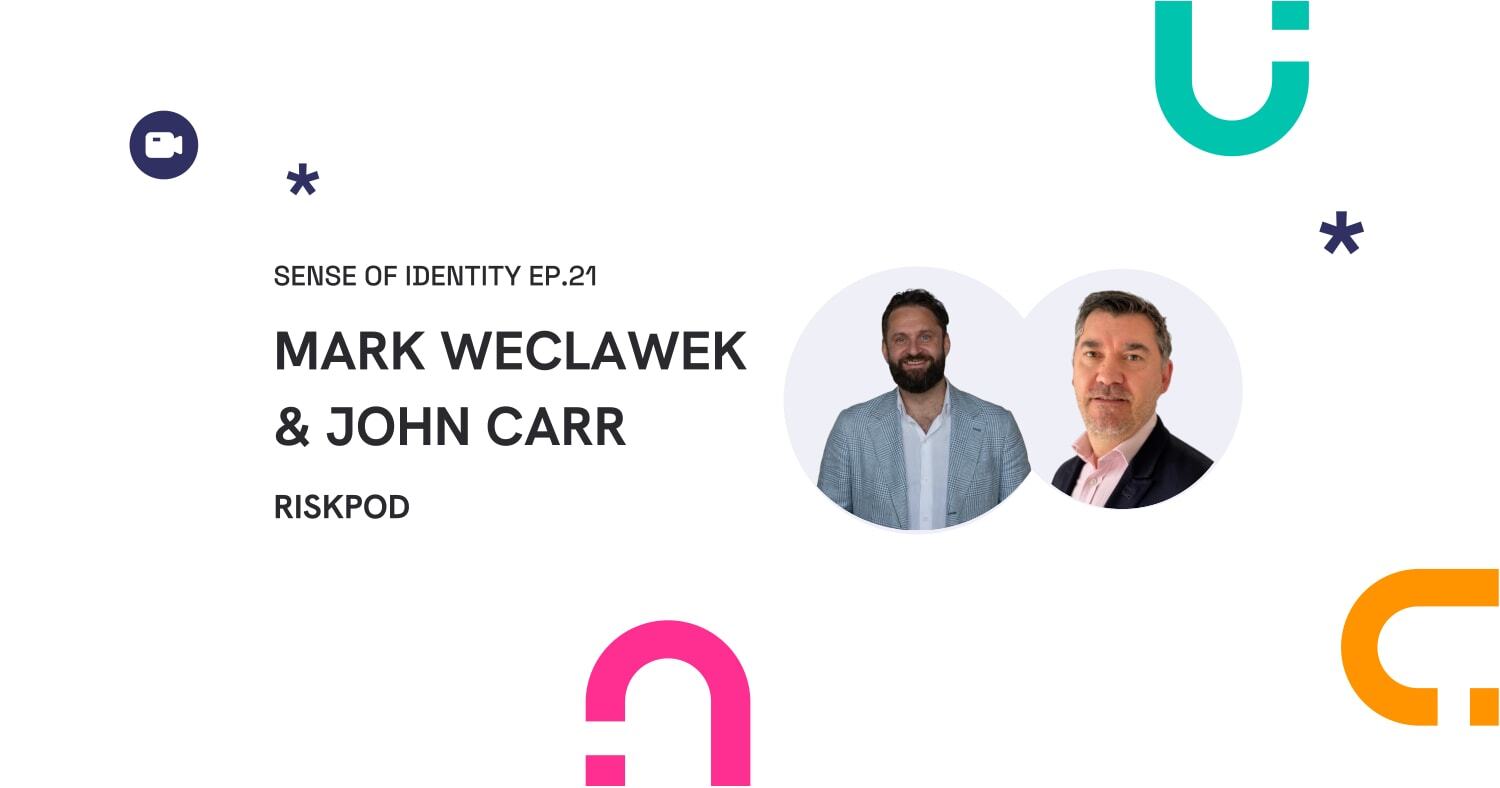
Mark Weclawek is CEO of RiskPod, with extensive experience in risk management and financial services. John Carr is the company’s Chief Risk Officer, with more than 35 years in banking and compliance.
Issues like PPI compensation, pension errors, and car finance mis-selling continue to drive significant remediation activity across financial services.
On Sense of Identity, Mark and John look at why regulatory breaches keep surfacing, why scrutiny alone has not closed the gap, and how firms can respond when remediation work arrives at short notice.
Written from the episode transcript with the help of AI, then edited and checked by our team.
The Real Cost of Getting It Wrong
Remediation is a familiar concept in the financial services sector.
Historic failures in areas such as PPI and endowment policies have led to billions paid out in compensation and significant operational strain.
The regulatory environment has evolved, and with it, the expectations placed on firms.
Many organisations are still caught off guard by supervisory action, particularly when it arrives without warning.
“They’ll find an issue in a customer portfolio and are given a short window to put things right,” John Carr says.
The challenge lies in resourcing. Most internal teams are optimised for business-as-usual activities, not the intensive requirements of remediation at scale.
"Firms aren't awash with compliance staff waiting around. We created RiskPod to be the solution that shows up when you suddenly need 30 people - not in months, but in days."
The result is a growing need for flexible compliance capacity: specialists who can intervene at short notice.
Why Remediation Keeps Coming Back
Regulatory remediation is rarely a one-off exercise.
Whether addressing legacy pension miscalculations or undisclosed car finance commissions, most action occurs only after customer harm is confirmed or suspected.
That pattern reinforces the reactive nature of much compliance activity, particularly in institutions with large, ageing datasets and fragmented records.
“You rarely see cases where people are doing this proactively across the board,” John Carr says.
While reactive by nature, remediation is beginning to be seen by some firms as a baseline element of responsible risk governance.
The Car Finance Cautionary Tale
A timely example is car finance commission. In March 2026, the FCA confirmed a motor finance compensation scheme covering around 12.1 million agreements, with total redress estimated at £7.5 billion.
This follows legal scrutiny of discretionary commission models where consumers were unaware that intermediaries received commission payments linked to the loan structure.
When this episode was recorded, the Supreme Court was still considering its decision. It ruled in August 2025, and lenders now face the work of reviewing data, assessing consumer harm, and issuing redress at scale. Parts of the scheme were suspended in July 2026 while a legal challenge proceeds.
The likely response mirrors earlier programmes: rapid mobilisation, operational triage, and structured case analysis teams.
Readiness, Not Panic
Mark and John describe RiskPod as a way for firms to bring in compliance capacity at short notice.
“We leave firms in a better, more self-sufficient place,” John Carr says. “The aim is capability transfer, not dependency.”
"I don’t want to come back next year and fix the same problem. I’d rather train your team, improve your systems, and make sure you don’t need us again for the same issue."
Fenergo's analysis found that global penalties for AML (Anti-Money Laundering), KYC, sanctions, and customer due diligence failures totalled $3.8 billion in 2025, making the financial imperative to streamline remediation greater than ever.
RiskPod says every individual on its platform is vetted against up to 90 performance and experience metrics, covering jurisdictional expertise, regulatory knowledge, and delivery reliability.
"It’s not a free-for-all," Mark Weclawek says. "Each person is a known quantity. Clients don’t need to spend weeks on training or verification."
Leaving Clients Stronger Than You Found Them
Mark and John want to shift industry thinking around compliance support.
They describe each project as including full documentation, transparent delivery methods, and optional capability-building for internal teams.
“My job isn't finished when the files are done,” John Carr says. “It’s when we’ve made the firm more resilient and better prepared to face the next challenge.”
"The world won't run out of remediation needs - but that doesn’t mean every firm has to stay stuck in the same loop."
Large remediation programmes also test how well firms can show what was sent, reviewed, and agreed with customers when supervisors ask for evidence.
Commenting for this article
"When remediation scales overnight, teams are judged on documentation and traceability as much as the redress outcome. Customer records and communications are often where gaps show up first."
Paul Holland, Founder and CEO, Beyond Encryption (Mailock)
FAQs
What Is Regulatory Remediation?
It’s the process of reviewing and correcting failures in compliance or customer treatment, usually identified through audits or regulatory investigation.
Why Are Remediation Projects So Common?
Because regulated environments are complex and dynamic. Issues may go undetected for years, only surfacing under scrutiny or as part of legacy system reviews.
How Does RiskPod Help with Remediation?
Mark and John describe RiskPod as providing rapid access to vetted compliance professionals who help firms scale and deliver remediation projects.
What's the Cost of Getting Kyc Wrong?
Fenergo's 2023 research put the average cost of a single KYC review for a corporate client at $2,598. For firms with thousands of records, the costs escalate quickly - especially if resourcing is outsourced last minute.
Is Remediation Just for Banks?
No. Remediation can affect any regulated firm, including fintechs, law firms, crypto platforms, and fiduciaries.
Sam Kendall works on digital marketing for Mailock by Beyond Encryption, helping build B2B marketing activity around research, first principles, and sustainable growth. He writes about marketing effectiveness, positioning, customer communications, and digital culture, with longer-form work published at ATNL.net.
 Sam Kendall



 Previous post
