Have you ever felt tangled in siloed data or weighed down by compliance demands? You're not alone.
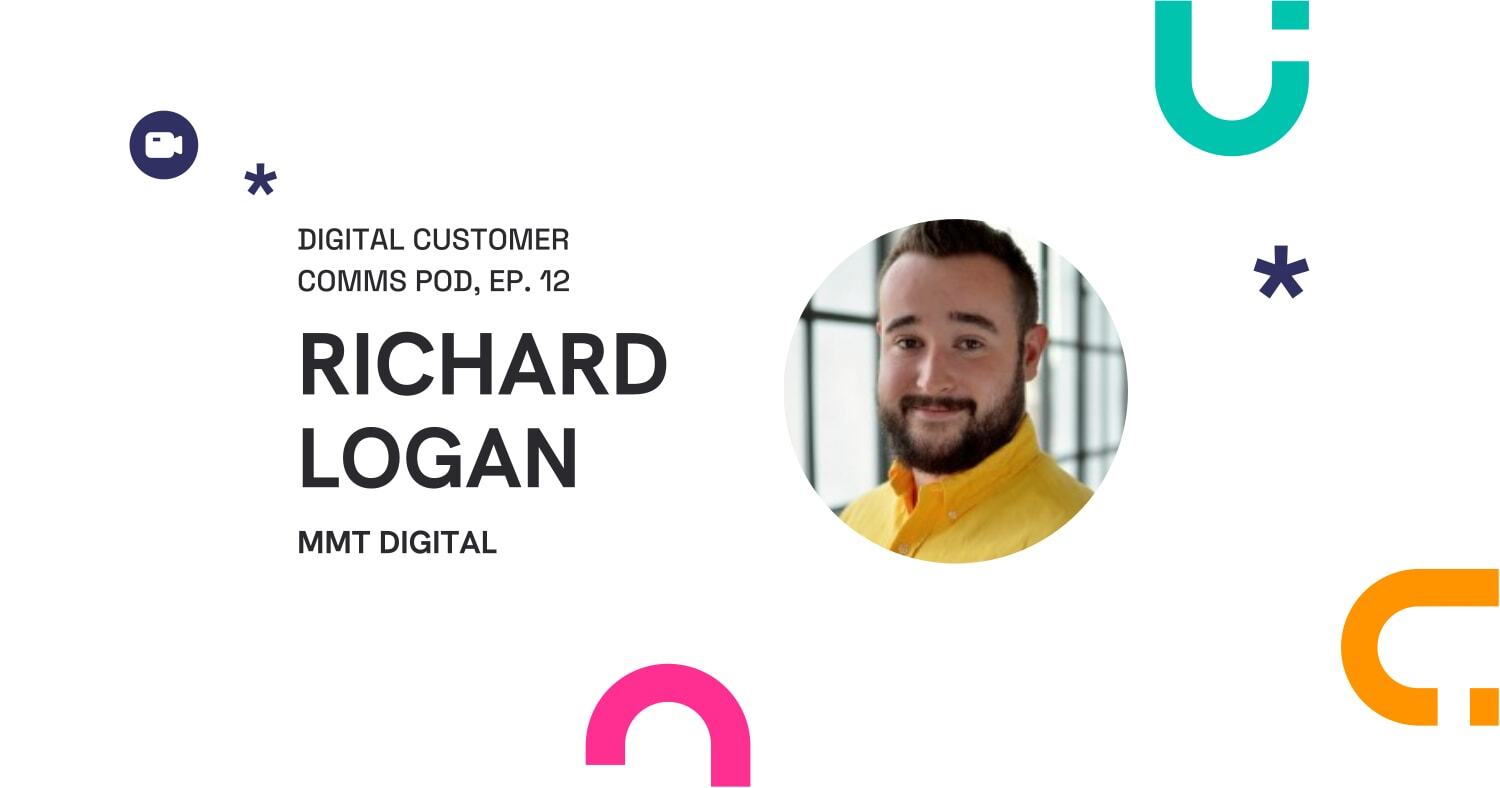
Richard Logan, Principal Digital Strategist at MMT Digital, explains how regulated organisations can unify customer communications, maintain compliance, and deliver measurable value.
MMT Digital has worked on global digital transformation programmes for well-known names like Vodafone, NFU Mutual, Schroders, TransLink, and Newcastle Building Society.
Logan's perspective covers the strategic, technical, and cultural elements that matter most when building a connected customer experience across channels.
Businesses face strict guidelines about how they gather, store, and use data.
They must also protect that data from cyber attacks.
Yet marketing and product teams often want to move fast to engage customers.
"In financial services, you can't just push out personal policy details in a marketing email.
You need the right authorisation trails in place, and you must separate certain data sets.
But you also don't want to treat your customers like strangers by ignoring the information you do have."
Richard Logan, Principal Digital Strategist, MMT Digital
Logan recommends adopting clear frameworks for data usage from the start.
Rather than waiting until the last sprint of a project to address compliance, involve risk and legal teams early.
This builds confidence internally and reduces the chance of rework or data breaches later on.
Commenting for this article
"Unified customer communications in regulated sectors only work when compliance constraints shape the architecture from the start, not after the channels are already live."
Paul Holland, Founder and CEO, Beyond Encryption (Mailock)
Overcoming Legacy Systems and Silos
Many brands struggle with technology that pre-dates modern customer experience standards.
Some systems even pre-date the millennium, making them inflexible.
From Mailock
Choosing The Right Customer Channel?
Read our research on portals, logins, email, and post before deciding how customers should receive important documents.
Stakeholders worry about downtime or lost records, especially if large customer bases rely on the service 24/7.
Success often depends on:
Assessing capabilities: Which systems are truly blocking transformation, and which are fine with minor tweaks?
Planning iteratively: Big-bang migrations can be risky - small steps let you deliver upgrades in manageable chunks.
Upskilling people: New tech platforms only work if staff learn to use them - and adapt their processes.
One major UK insurer, for example, added a new analytics layer to track customer interactions across its quote tool and digital portal.
It then used those insights to tailor follow-up email prompts, highlighting where customers dropped off.
That improved the user journey without overhauling its entire IT environment in one go.
Personalisation Done Right
Personalisation is more than adding a name to an email subject line.
It is about using data to give customers what is truly relevant.
In practice, regulated businesses must also avoid being too personal.
They should never expose or highlight confidential details on public platforms.
Logan shared a cautionary tale of a high street pharmacy that displayed sensitive product suggestions on its main homepage.
This crossed a line, making customers uncomfortable.
Instead, businesses in healthcare, finance, or similar sectors should base personalisation on aggregated data or behavioural triggers (e.g., "We've saved your quote - click here to pick up where you left off.")
Ultimately, personalisation should guide customers toward value and deeper engagement, not intrude on their privacy.
It is a balance between making experiences genuinely helpful and respecting compliance constraints.
Achieving Buy-In across the Business
One of the biggest hurdles is unifying not just your data, but also your organisational teams.
Successful projects often arise when there is a dedicated digital or transformation group that spans marketing, IT, compliance, and customer service.
This group becomes a single source of truth for capability planning, budget decisions, and technology choice.
"I.T. teams on their own may not always prioritise user experience.
Marketing might push for features that compliance isn't ready to approve.
You need a team that's empowered to reconcile those tensions under one roadmap."
Richard Logan, Principal Digital Strategist, MMT Digital
When teams adopt an agile, iterative approach - failing fast and learning from small pilot releases - they can address snags quickly.
Smaller test groups also help demonstrate wins to senior leadership, making it easier to secure future investment.
FAQs
What Is Unified Communications in a Regulated Environment?
It is a strategy for integrating all customer contact points - email, social channels, portals - into a consistent, secure framework.
In regulated sectors, this also requires close oversight of data privacy and audit trails.
How Does Unified Data Improve Customer Journeys?
It stops fragmentation by creating a single view of the customer.
This helps businesses tailor communications without losing track of compliance rules.
It also reduces repeat work for internal teams.
How Can We Protect Against Downtime During a Migration?
Organise the work in smaller phases.
Consider piloting new platforms for a subset of customers before a full rollout.
This approach reduces the risk of large-scale disruption.
Why Should Compliance Teams Be Involved Early?
They can highlight potential risks and prevent rework later.
Early input from compliance also builds trust within the organisation, helping new initiatives move forward confidently.
Is Personalisation Still Possible if Our Data Is Highly Restricted?
Yes, as long as you follow clear rules about which data can appear in specific channels.
Focus on contextual relevance rather than personal details.
For instance, remind a customer about a saved quote without exposing sensitive policies.
Sam Kendall works on digital marketing for Mailock by Beyond Encryption, helping build B2B marketing activity around research, first principles, and sustainable growth. He writes about marketing effectiveness, positioning, customer communications, and digital culture, with longer-form work published at ATNL.net.
 Sam Kendall


 Previous post
