
What Is Data Loss Prevention? Starter Guide to Email DLP
 Sabrina McClune


Data loss prevention (DLP) refers to a range of tools that help protect sensitive data, including credit card numbers and personal information. DLP aims to stop the loss of valuable data, either through human error or interception, before it's too late.
Data loss prevention is the process of identifying, monitoring, and protecting sensitive data from threats.
DLP tools are a subset of cybersecurity technologies that help protect one of your organisation's most sensitive assets: information.
While there are many different types of data security technologies, DLP is unique because it focuses on protecting information based on its sensitivity.
This can include anything from customer contact details held on an on-premises server to ID verification documents sent by email.
Why Is DLP Important?
Data Loss Can Be Costly
IBM's 2026 Cost of a Data Breach Report puts the global average cost of a data breach at USD 4.99 million.
What The Research Shows
IBM's 2026 report found that the global average cost of a data breach rose 12% on the previous year, to a record high.
Data Loss Can Be Embarrassing
How would you feel if your company lost all its customer records?
Or if it was fined because an employee accidentally sent a file containing client information over email? Data breaches can be a source of anxiety and stress, impacting employee wellbeing.
Data Loss Can Be Damaging
If someone steals customer details or your company's intellectual property, they likely intend to use it for their benefit.
That could lead to legal trouble and losses in revenue if customers are negatively affected and take their business elsewhere.
"Most data loss starts with everyday handling mistakes, not sophisticated attacks. Policies and tooling only help when teams know what counts as sensitive."
Paul Holland, Founder and CEO, Beyond Encryption (Mailock)
What Are Some Good Ways to Prevent Data Loss?
Develop a Robust Security Policy
Data security policies govern the use of company devices and networks to help prevent data breaches.
Data security policies are essential - but only if people follow them.
These policies can include remote wipe protocols, regular backups, and sign-in/out policies for particularly sensitive devices.
Encrypt Sensitive Data (at Rest and in Transit)
Encryption helps ensure sensitive data cannot be accessed by anyone who picks up a device or intercepts communications.
It disguises data with secret keys so only authorised individuals, apps, or networks can access it.
Use Enterprise Cybersecurity Software
Consumer cybersecurity software may not be enough when you're managing hundreds or thousands of data points.
Enterprise cybersecurity software helps keep security aligned with regulatory guidance.
Make Sure Devices Are Regularly Updated
Keeping software and devices up to date is vital to maintain good data security hygiene.
Patching and updates are a basic control, not an optional extra.
Updating operating systems and apps helps protect against the latest cyber attacks.
Utilise Identity Authentication When Necessary
When sharing sensitive documents, it's crucial to verify the identity of the recipient.
Use communications software that enables authentication to prevent data from reaching the wrong person.
"Email DLP works best when it can recognise sensitive patterns in the message itself, then pause or guide the sender before the wrong attachment leaves the organisation."
Mike Wakefield, CTO, Beyond Encryption (Mailock)
What Is Email Data Loss Prevention?
Email data loss prevention (DLP) refers to tools that help prevent the accidental or intentional release of confidential data via email.
DLP can protect both business and personal accounts on all types of devices.
It works by recognising sensitive information (like bank details or ID numbers) in message contents.
Some solutions may block an email or prompt additional sender checks before sending.
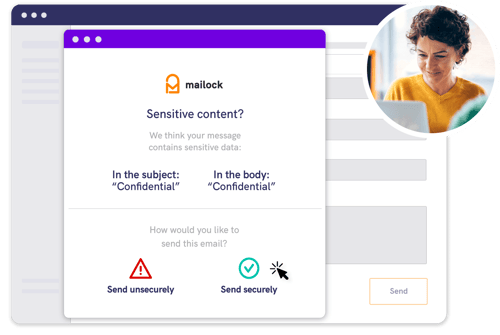
Mailock, our secure email platform, can encrypt emails automatically or guide the sender through confirmation checks.
Prevent Email Data Loss
Use Secure Email
If you use email to transfer sensitive information, make sure you have a secure email solution.
Use Authentication
Protect your email with authentication so that only the intended recipient can access it.
Don't Email!
If you're not using secure email, consider discussing sensitive matters on a video call instead, and check you are speaking to the right person, as video and voice can be faked.
It Doesn't Have to Be Hard
Preventing email data loss is easier when the controls match how people already work.
Choose a solution that matches your organisation's needs and the resources available - or avoid email altogether when security cannot be guaranteed.
FAQs
What Does Data Loss Prevention Mean?
DLP covers tools and processes that identify sensitive data and reduce the chance it leaves the organisation unsafely.
Which Data-Loss Risks Does the Article Highlight?
It highlights financial cost, embarrassment, reputational harm, theft of customer records, and misuse of intellectual property.
What Controls Support Dlp?
Policies, encryption, endpoint updates, enterprise security tools, and identity authentication all contribute.
References
Cost of a Data Breach Report 2026, IBM, 2026
Fighting Fatigue: A Whitepaper on Cyber Risk and Wellbeing, Beyond Encryption, 2022
What Is Secure Email?, Beyond Encryption, 2025
Reviewed by
Sam Kendall, 16.10.26
Sabrina McClune, 16.06.25
Read our editorial policy.
This content is for general information only and is not legal advice.
|
Originally posted on 13 06 22
Sabrina McClune writes about cybersecurity, data protection, digital identity, and digital transformation for Mailock by Beyond Encryption, helping regulated sectors understand complex technology and compliance topics with greater clarity. |
Email Series
Subscribe to
Subscribe to Privacy Decoded, our monthly email briefing about privacy, digital trust, and the forces shaping our online world.
 Previous post
